
Customisation becomes operational only when the knowledge behind a threat can be translated into logic the system can evaluate consistently.
A static database can tell you that a threat exists. It can store a definition, a procedure, an airport note or an operator policy. But an adaptive system needs to do something more: it needs to evaluate the conditions under which that threat becomes relevant.
This is where the Admin Panel and assessment logic behind Adaptive TEM become important.
From operational knowledge to a repeatable rule
Consider an operator-specific policy around a side-step approach. The airline may know that the manoeuvre is not authorised when a defined combination of runway geometry, approach conditions or company policy applies.
In a traditional document, that knowledge may appear as text that the crew must find, interpret and apply.
Inside Adaptive TEM, the same knowledge can be structured as assessment logic.
Operational condition → rule or formula → system evaluation → relevant threat or policy surfaced
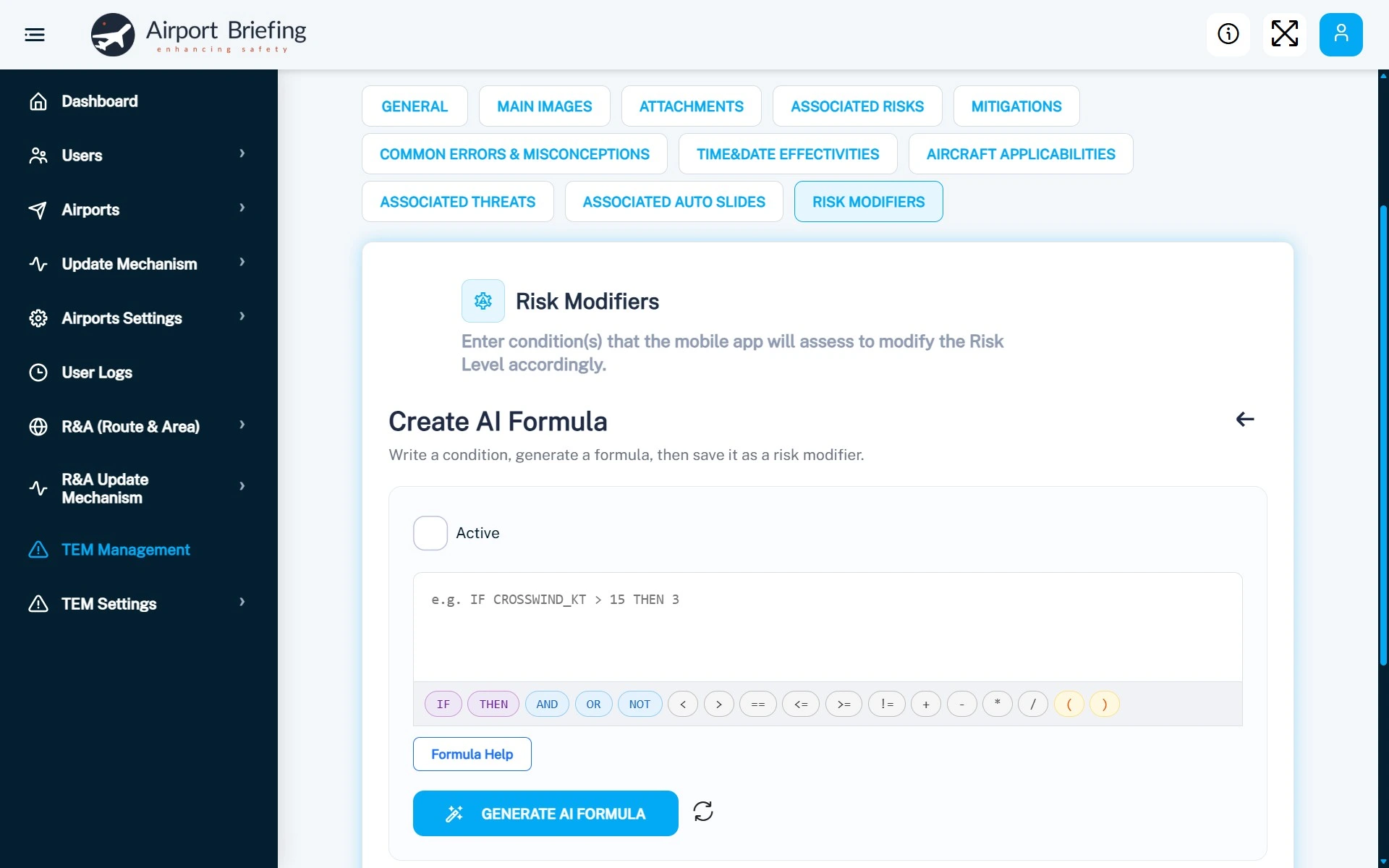
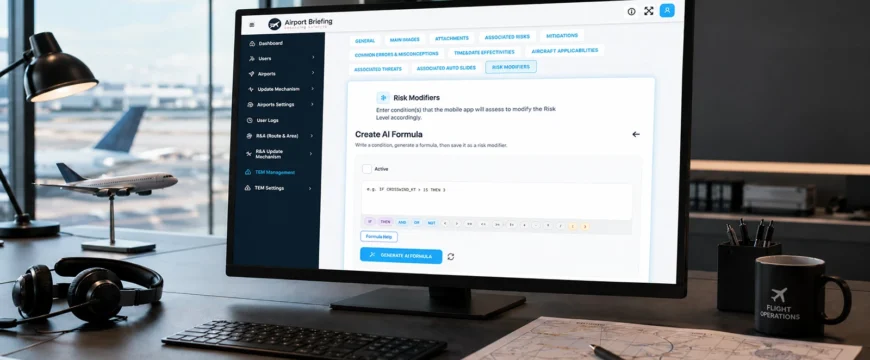
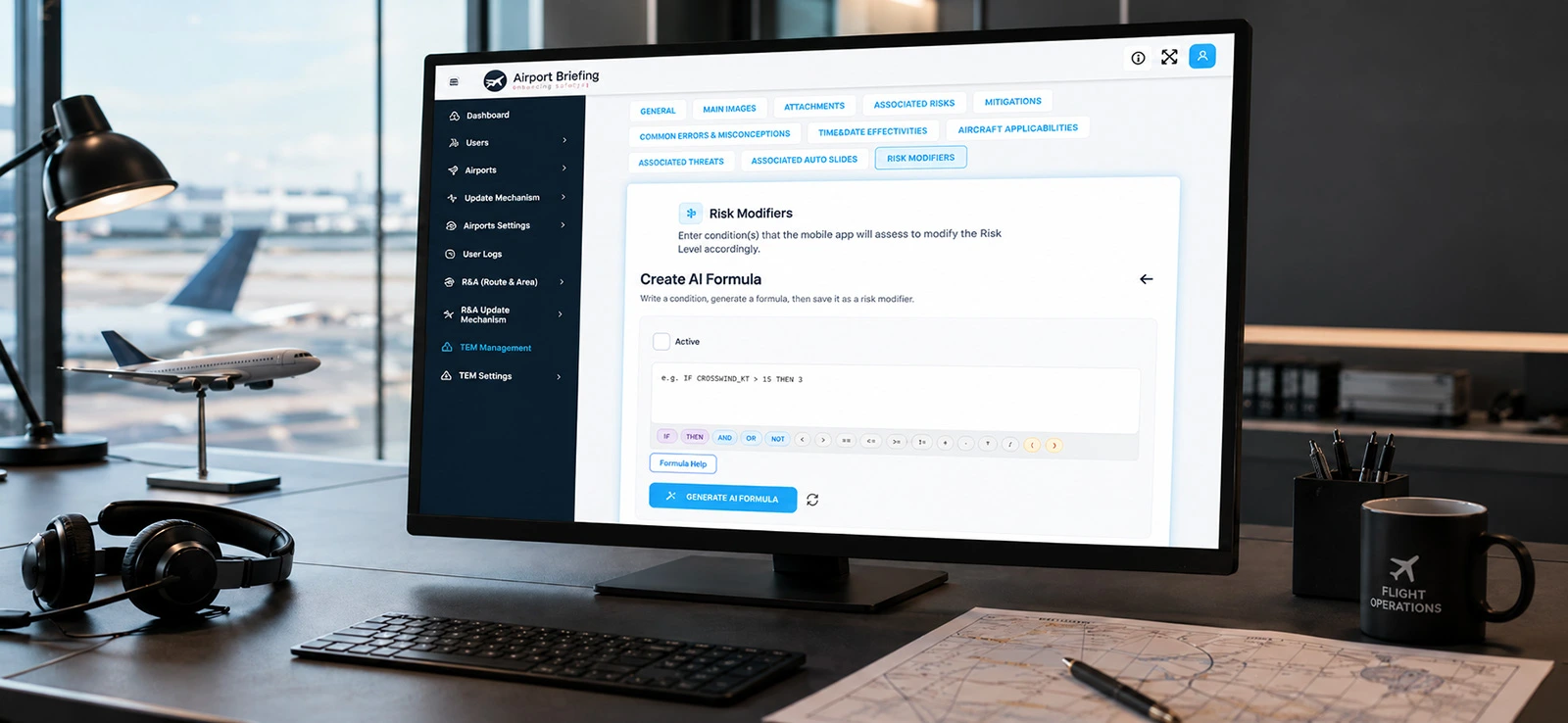
For example, an administrator can define the variables that matter to the rule – such as runway configuration, runway relationship, approach type, aircraft or operator policy – and connect them to the threat “Side-step Approach Maneuver Not Authorized.”
When the defined conditions are met, the system can activate that threat for the operation. When they are not met, it remains in the knowledge base without being presented as an active operational concern.
The same principle can be applied across the operation
The logic does not have to be limited to a single airport rule. Depending on the threat, an assessment can consider combinations of weather, runway configuration, airport characteristics, aircraft type, approach or departure, phase of flight, local procedures and operator-specific policy.
This is how a threat library becomes an adaptive model: the system is not simply retrieving text. It is evaluating whether the operational conditions match the logic defined for that threat.
Where AI fits – and where it does not
AI can assist selected administrative processes, including helping specialists structure operational knowledge and formulate rules more efficiently. But the operational rule itself should remain defined and validated by aviation experts.
Adaptive TEM does not need generative AI to independently decide what is safe or unsafe. Once the assessment logic has been approved, the system can apply that logic consistently and traceably to the relevant operational data.
That distinction is important for a safety-related product: human expertise defines what the rule means; the software evaluates when the approved rule applies.
This is also what makes operator customisation meaningful
When an airline adds a threat identified through its own Safety Management System, it does not have to stop at adding a new line to a database.
The organisation can also define the conditions and logic that determine when that threat should become relevant in the briefing. In this way, internal knowledge can move from manuals and safety documentation into a repeatable operational assessment.
Human expertise defines the logic. Adaptive TEM makes that logic operational.
See how operator knowledge can become part of an adaptive operational briefing.